Art isn’t just something to hang on a wall—it’s medicine for aging. Research increasingly shows that creative engagement transforms senior health in surprising and profound ways. Here are 4 ways Art impacts aging:
Strengthening the Brain
Creating art activates multiple brain regions simultaneously. Whether painting, sculpting, or drawing, seniors stimulate visual processing, motor skills, decision-making, and memory centers all at once. For people with Parkinson’s disease, dance-based programs like Dance for PD® show measurable improvements in balance, cognition, and motor control. Museum programs for people with dementia and their caregivers reduce cognitive decline while easing depression and strengthening relationships.
Building Social Connection
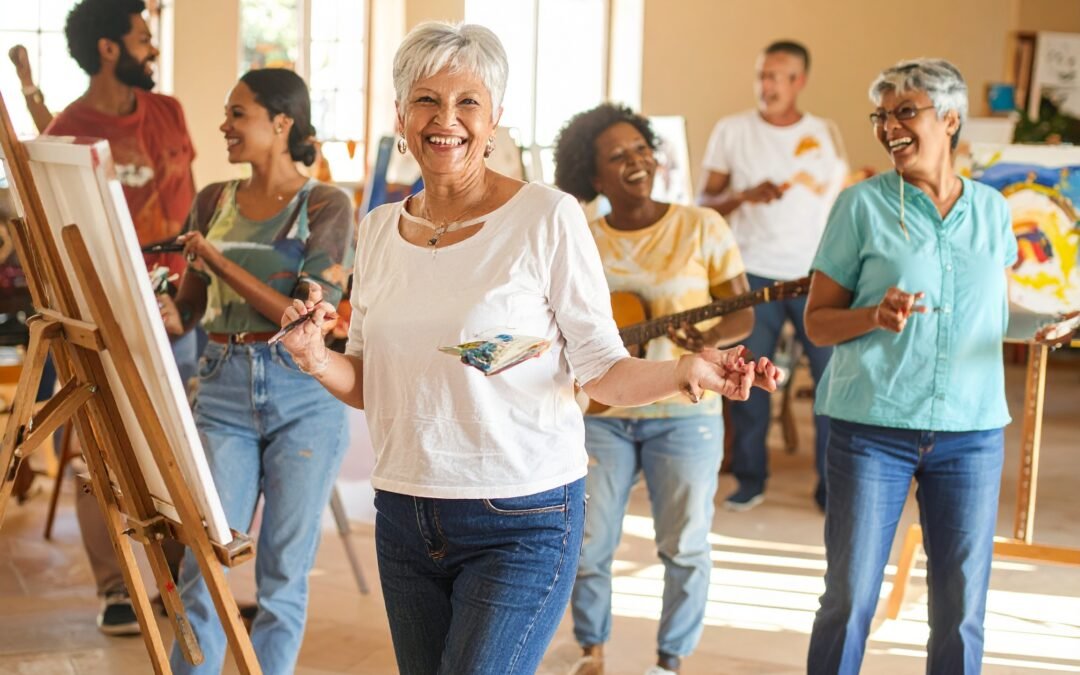
Loneliness is a public health crisis affecting millions of seniors, with health impacts equivalent to smoking 15 cigarettes daily. Art classes and creative workshops combat isolation by bringing people together around shared creative goals. Participants form friendships, laugh together, and experience belonging—powerful antidotes to the isolation that often accompanies aging.
Improving Mental Health
Art provides a non-threatening way to process emotions, reduce anxiety, and express experiences words alone cannot capture. Creative expression lowers stress hormones, reduces depression, and builds self-esteem. For seniors managing life transitions, loss, or chronic illness, art offers emotional release and purpose.
Enhancing Physical Health
Beyond the brain, art engagement correlates with better overall health outcomes. Recent studies show arts participation helps prevent heart disease, diabetes, and other chronic conditions. The combination of cognitive engagement, emotional processing, and social connection creates measurable physical benefits.
Finding Purpose and Legacy
Creative work gives seniors ongoing purpose. Whether teaching younger generations, sharing their art, or discovering new talents, creative engagement affirms that life continues to hold meaning and possibility.