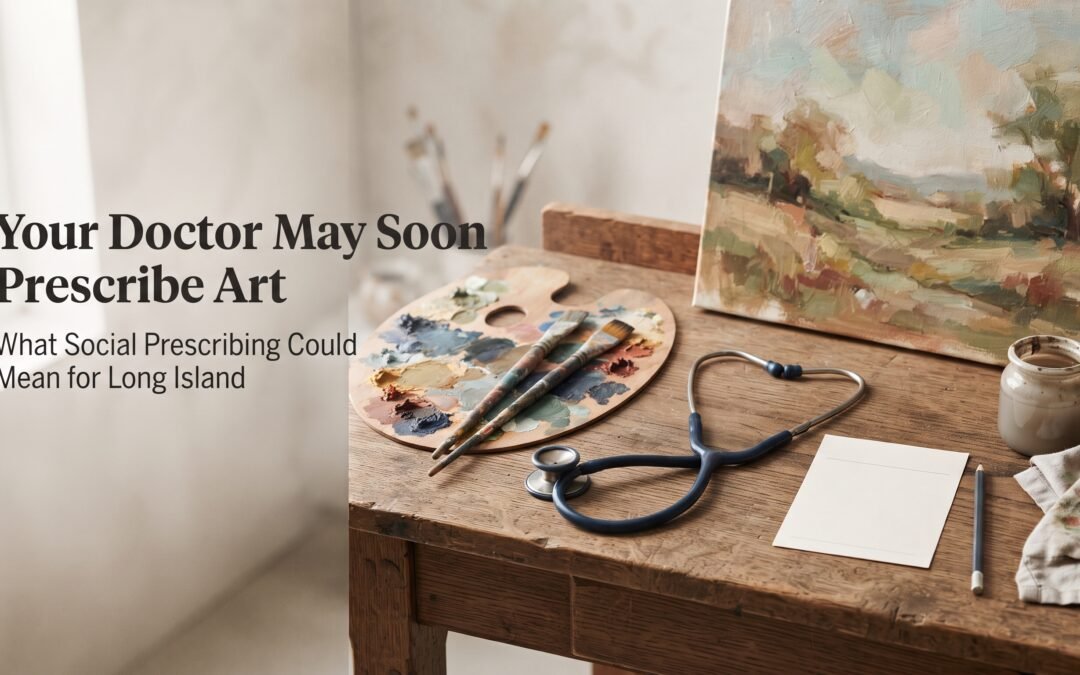
What if one of the most important things your doctor could prescribe did not come from a pharmacy?
What if, alongside medical care, your doctor could connect you to a painting workshop, creative writing circle, museum visit, dance class, choir, or community art program?
That idea may sound unusual, but it is already happening.
Across the United States and around the world, healthcare leaders are beginning to recognize something artists and communities have understood for generations: creativity, human connection, and a sense of belonging can play an important role in our well-being.
Art is taking on another vital function.
It is not only something we display, perform, or sell. Art can also help people express what they cannot put into words, reconnect after loss, reduce isolation, rediscover purpose, and feel part of life again.
This growing movement is known as social prescribing—and it could transform how we think about both healthcare and the arts.
What Is Social Prescribing?
Social prescribing connects people with nonmedical community activities and resources that may improve their health and quality of life.
Instead of looking only at a diagnosis, a social-prescribing approach asks broader questions:
Are you lonely? Are you grieving? Do you feel disconnected? What brings you joy? What would help you feel involved in life again?
A healthcare provider or trained connection specialist can then refer someone to an appropriate community program. That might include:
- An art or craft workshop
- Music, singing, or dance
- Creative writing or storytelling
- Museum and cultural programs
- Gardening or nature activities
- Volunteer opportunities
- Exercise and wellness groups
- Support groups and community gatherings
These activities do not replace necessary medical or mental-health treatment. They work alongside traditional care by addressing the social and emotional circumstances that affect a person’s health.
That distinction matters. A community art program does not have to be clinical art therapy to provide meaningful benefits. Creative engagement itself can offer connection, expression, confidence, stimulation, and joy.
Why This Matters Now
We are facing a serious crisis of loneliness and social isolation.
The U.S. Surgeon General has warned that a lack of social connection can increase the risk of premature death at a level comparable to smoking up to 15 cigarettes a day. Social disconnection is also associated with greater risks of heart disease, stroke, depression, anxiety, and cognitive decline.
Medication cannot solve loneliness.
A medical appointment cannot, by itself, rebuild someone’s sense of belonging.
But a welcoming creative space can become the beginning of connection.
Imagine an older adult who has stopped participating in community life after losing a spouse. A weekly painting circle gives her somewhere to go and people who expect to see her.
Imagine a person living with chronic illness who feels that every conversation has become about symptoms. In a creative workshop, that person can be seen as a storyteller, maker, singer, or artist—not simply as a patient.
Imagine a young person struggling to explain grief, fear, or anxiety. Art can offer another language.
That is where creativity becomes more than an activity. It becomes a pathway back to life.
The Movement Is Already Growing
Social prescribing has been part of the United Kingdom’s National Health Service for several years, connecting patients with local, nonclinical support through trained link workers.
The movement is also growing in the United States.
New York City healthcare and cultural institutions have developed arts-in-health collaborations that bring music, visual art, dance, and other creative experiences into healthcare settings. UJA-Federation of New York’s SocialRx program connects older adults with community resources—including creative workshops, volunteering, support groups, and wellness activities—to address loneliness, loss, life transitions, and chronic health challenges.
The World Health Organization has also developed resources to help communities and healthcare systems implement social-prescribing programs. WHO describes social prescribing as a way of connecting people to community-based, nonclinical services that can support health and well-being.
This is no longer a fringe idea. It is part of a much larger shift toward treating the whole person—not only the condition written in a medical chart.
What Could This Look Like on Long Island?
Long Island has extraordinary resources: artists, libraries, museums, senior centers, cultural organizations, healthcare systems, schools, faith communities, social-service providers, and nonprofit organizations.
What we need now are stronger connections between them.
A true arts-on-prescription network could allow a physician, social worker, senior-services professional, caregiver, or community organization to connect someone with an appropriate creative program close to home.
That could include:
- Creative programs for older adults experiencing isolation
- Art and storytelling programs for people navigating grief or loss
- Intergenerational workshops connecting youth and seniors
- Programs for individuals and families affected by illness
- Accessible online workshops for people unable to travel
- Community art experiences that restore purpose and belonging
- Partnerships between healthcare providers and local arts organizations
For that system to work, community arts organizations need consistent programming, trained facilitators, accessible locations, dependable funding, and strong referral partnerships.
This is where Long Island has an opportunity to lead.
How You Can Become Part of the Movement
Social prescribing cannot be built by healthcare providers alone. It requires artists, organizations, funders, volunteers, and community members working together.
If You Are an Artist or Creative Facilitator
Think beyond exhibiting or selling your work. Consider how your creative practice could help people connect, express themselves, or move through a difficult season.
You might lead a workshop, volunteer with a community organization, develop an accessible program, or partner with professionals serving seniors, youth, caregivers, or people experiencing grief and illness.
You do not have to become a therapist to create a compassionate, nonclinical space. However, you do need appropriate boundaries, preparation, and an understanding of the population you are serving.
If You Represent a Healthcare or Social-Service Organization
Look beyond the walls of your institution.
Learn what arts and cultural programs already exist in your community. Explore partnerships with organizations that can offer welcoming, well-managed creative experiences. Ask whether your patients or clients could benefit from connection in addition to clinical care.
A referral to a community program may appear simple, but for someone who has become isolated, it can be life-changing.
If You Are a Funder or Business Leader
Community arts programming needs investment.
Funding makes it possible for organizations to offer programs consistently, compensate artists, train facilitators, provide supplies, improve accessibility, collect meaningful impact data, and become dependable referral partners.
Supporting arts-in-health programming is not simply sponsoring an event. It is investing in community well-being.
If You Are a Community Member
You do not have to wait for a doctor’s prescription to bring creativity back into your life.
Join a workshop. Visit a museum. Sing, dance, paint, write, garden, or make something with other people. Invite a neighbor, friend, or older relative to participate with you.
The goal is not to create a masterpiece.
The goal is to create connection.
Healing Art Together’s Role
At Healing Art Together, we believe art can help people move through grief, trauma, illness, and isolation by creating opportunities for expression and human connection.
Our work is nonclinical, but its purpose is deeply connected to well-being. We want to help build a future in which Long Island artists, community organizations, healthcare providers, and funders work together to make creative engagement more accessible.
Our goal is to provide consistent arts programming and become part of the growing network of organizations that healthcare and social-service professionals can confidently recommend.
We are inviting:
- Artists and creative facilitators who want to serve
- Healthcare and social-service professionals interested in referrals
- Community organizations seeking program partnerships
- Businesses and funders committed to community well-being
- Volunteers who believe in the healing power of connection
- Residents who want greater access to meaningful creative experiences
The Future of Art Is Bigger Than We Imagined
Art will always inspire, challenge, beautify, and tell the stories of our time.
But its future may be even bigger.
Art can help an isolated person find community. It can help someone living with illness feel human again. It can give grief somewhere to go. It can help people rediscover their voices, their confidence, and their place in the world.
The prescription may say art.
But what it is really prescribing is connection, expression, purpose, and hope.
And Long Island can help lead the way.
Interested in partnering with Healing Art Together, supporting our programs, or becoming part of Long Island’s growing arts-and-well-being movement? Contact us to begin the conversation.