In Beth’s Words
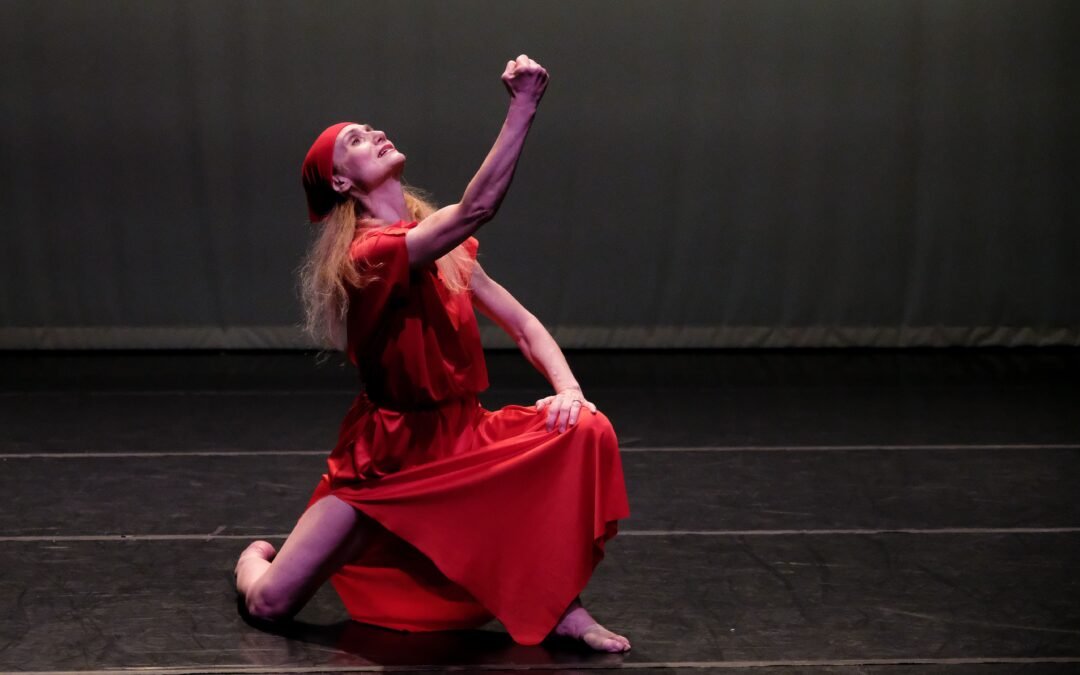
The Body Resilient: Visions of Art for Healing was presented by Dance Visions NY at Cedarmere Preserve in collaboration with the Friends of Cedarmere. The concert featured rarely seen heroic and dramatic repertory of Isadora Duncan, alongside new works choreographed by Beth Jucovy and company members, many performed with live music. Themes of pain and healing, despair and hope, and resilience in the face of personal and global challenges wove throughout the evening.
It was truly wonderful to present this concert at this time and in this space. It felt deeply relevant to so many people. I believe that, in general, many are suffering now — from personal losses, health issues, and relationship struggles, to worry and fear about our global future. This program, I feel, not only expressed those emotions but also conveyed beauty, possibility, and hope.
Presented in this beautiful environment, surrounded by nature, it also captured the wonder of our world — all that we can appreciate if we only dare to notice. In its way, it was a call to humanity to unite and make a difference. The concert bridged past and present through timeless themes.
It was a privilege to share this performance. In addition, there was a wonderful art show with works related to the concert’s theme. It was a truly multidisciplinary and interdisciplinary presentation, bringing together visual art, dance, and live music.
This concert was devoted to my sister, Duncan dance master Adrienne Ramm, and her artistic legacy as she navigates illness — as well as to all those facing personal challenges and those who feel concern or pain about the current national and global situation.
My deepest thanks to our funders — a grant from the Malaika and Anthony Bregman Fund and a General Operating Support Grant funded by the New York State Legislature and the Office of the Governor.
About Beth Jucovy & Dance Visions NY
Beth Jucovy is the founder, artistic director, and choreographer of Dance Visions NY — a 501(c)(3) nonprofit based in Great Neck, dedicated to keeping the Isadora Duncan dance tradition alive and current. Beth has been a lifelong Isadora Duncan dancer, a protégé of the late Julia Levien, and also studied with Anna Duncan in childhood.
Founded in 1990, Dance Visions NY presents both authentic Duncan repertory and original interdisciplinary works that weave dance with spoken word, visual art, and live music. The company has performed at the 92nd Street Y, City Center, Tilles Center, festivals, museums, universities, schools, libraries, and landmark gardens throughout the New York metropolitan area — and internationally in Europe and Israel.
Beth is also a friend and fellow nonprofit leader, and her work in healing through the arts is deeply aligned with the mission of Healing Art Together.
Learn more: dancevisionsny.org/director
Dance, Healing & The Body Resilient
In conversation with Beth Jucovy
1. How can dance and movement be used for healing?
Dance and movement can be deeply healing because they invite us to listen to and trust the body. When people feel free to move without judgment, they often experience a sense of release, vitality, and emotional openness. Music plays a powerful role, as rhythm and melody naturally awaken sensation, memory, and feeling — especially music connected to earlier stages of life.
Through movement, emotions can surface and be expressed without needing to be named or analyzed. The body has its own intelligence and capacity to process experience through sensation and gesture. Watching others move can also be healing, as it can stir recognition, empathy, and emotional resonance. Witnessing trained bodies in motion may inspire awe and remind us of the body’s remarkable ability to communicate, connect, and transform.
2. What is it about Duncan repertory that speaks to modern crisis and uncertainty?
Isadora Duncan’s repertory speaks powerfully to the present moment because it addresses the most essential aspects of being human during times of uncertainty. Her works explore nature, growth, loss, grief, spirituality, and hope — experiences that become especially heightened during periods of social and political upheaval. Her mythological dances tap into archetypal human struggles, while her political works, many created during revolutionary moments of the early twentieth century, confront themes of courage, mourning, resilience, and possibility.
Today’s audiences are living with ongoing instability, loss, and change, and Duncan’s work offers a way to feel and process these realities through the body and through music. When these works are presented with contemporary awareness — through inclusive casting or subtle shifts in staging and costuming — they do not feel historical, but urgently relevant, offering audiences both recognition and hope.
3. How did you design the arc from despair to hope in The Body Resilient?
The concert was structured as an emotional journey. It opened with two nature-based works — Waves and El Condor Pasa — which emerged gently from the environment, establishing peace, openness, and freedom. This grounding allowed audiences to enter the experience with calm and receptivity.
The program then shifted to more emotionally charged, historically and politically rooted Duncan works addressing despair, struggle, resilience, and victory. The next section featured works set largely to live music — solo vocalists with instrumental accompaniment, and a chorus — exploring themes of connection, loss, empowerment, anger, and perseverance. Familiar songs invited audiences to experience these emotions vicariously through both music and dance.
The final section returned to classic Duncan repertory, culminating in works that explicitly transform despair into hope, and closed with Hallelujah, sung by the chorus, finishing the evening on a plaintive note of spiritual reflection.
4. What did dedicating the concert to Adrienne Ramm mean to you personally?
Dedicating the concert to Adrienne Ramm was deeply personal for me. This past year has been one of the most challenging of my life, as my sister — someone to whom I feel profoundly connected — experienced a sudden and severe mental health crisis. Navigating the complexities surrounding her care, alongside differing family perspectives and styles of communication, placed me in an emotionally difficult position and left me carrying a great deal of sadness and frustration.
My sister has been a formative influence throughout my life, particularly in my artistic path and spiritual practice. She was an extraordinary artist and performer, highly respected in her field. Dedicating this concert to her allowed me to honor both her artistic legacy and the deep bond we share. Through the work, I was able to express emotions that were difficult to assimilate otherwise, and to transform them into something meaningful.
5. What do you want someone who’s suffering to feel 10 minutes into the performance?
Within the first ten minutes, I hope someone who is suffering begins to feel a sense of calm, openness, and gentle empowerment. The opening of the program is designed to create a supportive atmosphere that invites focus and emotional presence, allowing viewers to settle and feel held by the experience.
From that place, the work can open space for reflection — on personal values, compassion, and one’s relationship to the world. I hope it encourages a renewed sense of engagement, possibility, and inner strength, offering not only comfort but also confidence, agency, and the courage to remain connected to life and to others.
6. What role did nature and place — Cedarmere — play in the healing experience?
The outdoor setting at Cedarmere played an integral role in the healing experience. Surrounded by water — the harbor and the pond — along with abundant greenery and flowers, the space offered both intimacy and expansiveness. This natural environment supported a sense of calm, reflection, and presence that the program called for.
Being in this idyllic outdoor space allowed the community to gather in a shared, living landscape, where the performance became a kind of artistic testimony — one that invited reflection, healing, and ultimately, inspiration.
7. How do collaborations — choir, musicians, visual art — expand the healing impact?
Collaborations with other art forms greatly expand the healing impact by creating multiple points of entry for the audience. This layering of artistic expression increased the accessibility and emotional reach of the program, allowing people to connect in different ways.
Music and dance naturally exist in dialogue, so incorporating live musicians felt organic and essential. The visual art exhibition that preceded the performance — also focused on themes of challenge and resilience — further enriched the evening, creating a more complete and immersive environment. Together, these collaborations supported a sense of wholeness, offering many pathways for reflection, connection, and healing.
8. What’s one story from an audience member that stayed with you?
A response that stayed with me came from a member of the hosting organization, who shared how deeply inclusive and receptive the atmosphere felt throughout the evening. He described the audience as fully immersed, even when political perspectives were present, noting that the tone of the work allowed people to remain open rather than defensive.
He also spoke about how the narration helped viewers feel respected and empowered, creating space for personal viewpoints. That conversation concluded with an invitation to return and present this program annually, which felt like a meaningful affirmation of the work’s impact.
9. If a library or community center wanted a “healing through movement” version, what would you offer?
For a library or community center, I would offer a participatory “healing through movement” program tailored to the setting. In a library, this might take the form of a workshop, while a community center could include a workshop with some elements of performance. The workshop would draw on somatic practices, inviting participants to connect more deeply with their bodies, emotions, and life experiences, and to gently explore how these can be expressed through movement.
With an emphasis on authenticity and personal choice, participants would be encouraged to discover their own movement vocabulary, style, and musical preferences. Guided movement improvisations would be a central component, using a variety of music, including selections chosen by participants. Together, these components would create a supportive and inspiring environment that weaves physical and emotional awareness, fostering creativity, self-expression, and overall well-being.
Dance Visions NY
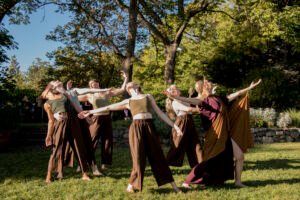
Image credits:
-
Featured image: Yi-Hsin Lin
-
End photo: Martha Gorfen
 Learn more: dancevisionsny.org
“In its way, it was a call to humanity to unite and make a difference.”
— Beth Jucovy
Dance Visions NY · Healing Art Together · The Body Resilient, 2025